
Jones County Court Records After Arrest
Jones County court records after a jail arrest should be read as a pathway: arrest, booking, first appearance or magistrate action, prosecutor review, formal charging document, clerk filing, and case disposition. The Jones County Sheriff or arresting agency handles arrest, booking, custody, and jail status. The court record starts when charges are filed and maintained through the correct clerk or court.
That distinction is important because jail booking records and court records can disagree. A person can be booked on one allegation and later face a complaint, information, indictment, amended charge, reduced charge, dismissal, or final disposition. For the custody side, use Jones County jail inmate records. For booking-photo questions, use Jones County jail mugshots. For the formal court charge after arrest, use prosecutor, clerk, and court sources.
The 259th District Attorney page is a core Jones County source for felony and district-level prosecutor contact after an arrest.
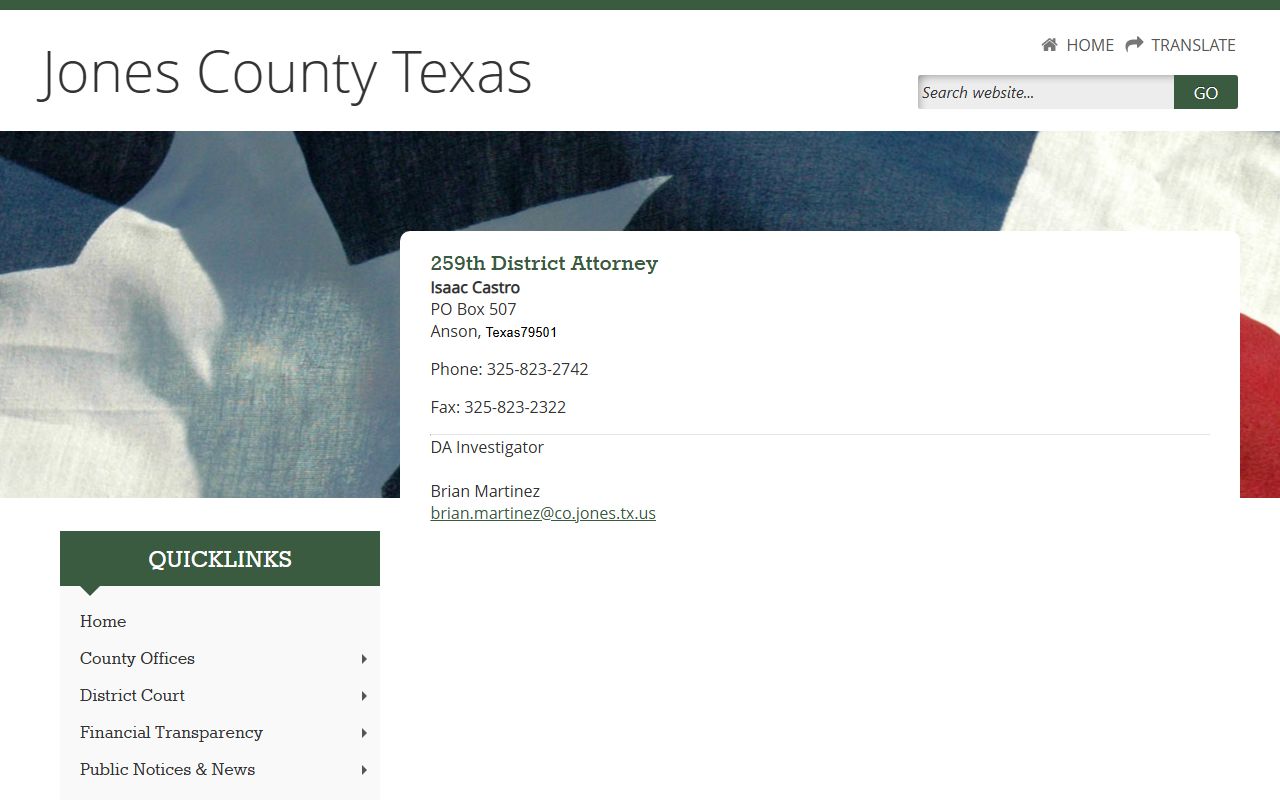
The prosecutor contact page helps route charge questions, but it is not a substitute for the clerk record in a filed court case.
Find Court Records After Arrest
Jones County did not publish a confirmed official criminal docket search link during research. The County Clerk page links to the LGS online records portal, but that county page identifies searchable record types such as land records, probate records, birth record index, death record index, and marriage records. It was not confirmed as a criminal case portal. re:SearchTX also exists as a statewide court-record service, but direct inspection was restricted or blocked during research, so no Jones-specific criminal docket field labels are claimed.
- Confirm custody or release status through VINELink, Texas IVSS-Counties, or the Jones County Sheriff at 325-823-3201.
- Identify the arresting agency, defendant name, approximate arrest or filing date, and any case number.
- Decide which office is likely involved: District Clerk for district court, County Clerk for county-level records, or Justice of the Peace for lower-court matters.
- Contact the correct clerk and ask whether a criminal case has been filed after the arrest.
- Read each charge status carefully because a booking allegation may later be amended, reduced, dismissed, or replaced.
The LGS online records portal is linked by the County Clerk and displays login and guest-entry controls, but the research did not verify it as a Jones County criminal docket search.
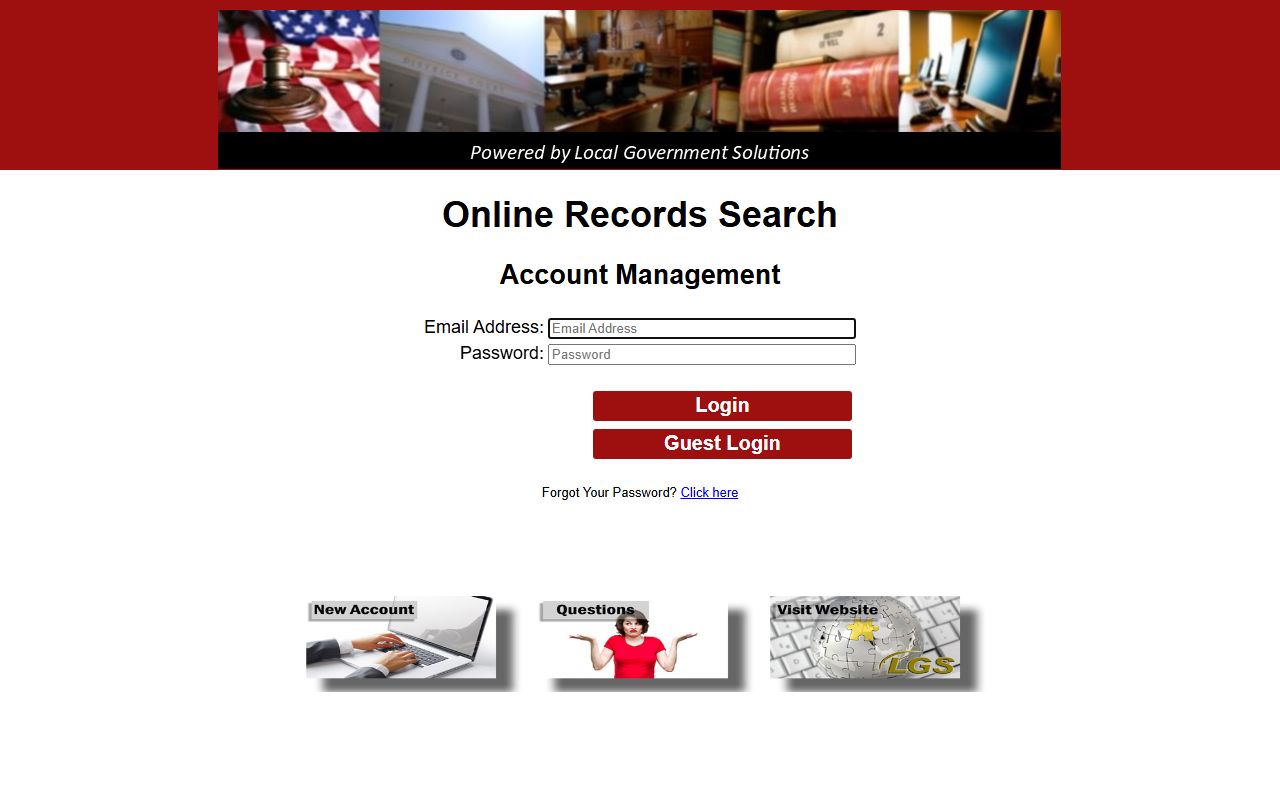
Use the portal only for the record categories the county supports, and contact the clerk before treating it as the criminal case source.
Jones County Court Contacts
Several Jones County offices can touch a court record after a jail arrest. The right office depends on the charge level, court, and stage. Texas OCA's October 2025 district-court list places Jones County in the 259th District Court. The county research also identifies the District Attorney, County Attorney, District Clerk, County Clerk, and Justice of the Peace as key routing points.
| Office | Official Details | Use in an Arrest-to-Court Search |
|---|---|---|
| 259th District Attorney | Isaac Castro, P.O. Box 507, Anson, TX 79501; 325-823-2742 | Prosecutor contact for felony or district-level charge questions. |
| County Attorney | Chad Cowan, P.O. Box 68, Anson, TX 79501-0068; 325-823-3771 | County-level prosecutor contact where local structure assigns the matter. |
| District Clerk | Lacey Hansen, Anson, TX 79501; 325-823-3731 | District court filings and case-record routing. |
| County Clerk | LeeAnn Jennings, Anson, TX 79501; 325-823-3762 | County records and portal questions, with criminal docket access not confirmed online. |
| Justice of the Peace | Judge Cheryl Guernsey, P.O. Box 345, Anson, TX 79501; 325-823-3761 | Lower-court, warrant, or magistrate-related routing where applicable. |
Charges Filed After Arrest
Formal court records after a Jones County arrest depend on the charging instrument. The booking entry may show the reason for arrest, but the prosecutor or grand jury process decides what becomes the case in court. A complaint can begin an allegation, an information can be filed by a prosecutor in some Texas cases, and an indictment is a grand-jury charging instrument commonly used for felonies.
| Complaint | Information | Indictment | |
|---|---|---|---|
| Filed By | Officer or prosecutor, depending on context | Prosecutor | Grand jury |
| Common Use | Initial allegation or case-starting document | Some prosecutor-filed Texas criminal cases | Felony charging process |
| Record Role | Can open or support the case path | States formal charge selected by prosecutor | Shows grand-jury accusation |
| Why It Matters | May differ from booking language | Can refine charge level or facts | Can replace earlier arrest wording |
Jones County Charge Status
A charge status describes what has happened to the filed court charge, not just what appeared during booking. Charges can stay pending, be amended, be reduced, be dismissed, or end in a conviction. The court record may also show a disposition, which means the outcome or current final status. If a person has more than one charge, each charge can have a different status.
| Status | What It Means |
|---|---|
| Pending | The case or charge has been filed and has not reached a final outcome. |
| Amended | The charge language, level, or legal theory changed after filing. |
| Reduced | The charge was lowered to a less serious offense or level. |
| Dismissed | The charge ended without a conviction on that count. |
| Conviction | A guilty plea, verdict, or formal finding ended the charge as a conviction. |
| Disposition | The current or final outcome recorded for a case or charge. |
Bond After Jones County Arrest
No official Jones County jail bond page or payment instruction page was located. Bond should therefore be handled as a Texas criminal-process topic with local confirmation. Before paying anyone, confirm custody, bond amount, bond type, court, payment location, payment hours, and any hold that may block release. Call the Jones County Sheriff or the relevant court or clerk before relying on a private source.
| Bond Type | How It Works | Jones County Note |
|---|---|---|
| Cash bond | Money is paid as security for appearance. | Local payment method was not located. |
| Surety bond | A licensed bond company posts bond for a fee. | Verify the case and amount directly before paying. |
| PR bond | Release on promise to appear, with conditions. | Eligibility depends on court or magistrate order. |
| Property bond | Property is pledged as security where allowed. | Local process was not located. |
| No-bond hold | Release is not available on ordinary bond. | May involve court order, warrant, parole hold, ICE, or another agency. |
Warrants Before Arrest Records
No official Jones County active-warrant search was found on county pages inspected. The sheriff page gives phone and fax details and a VINELink custody-status referral, but no warrant lookup and no confirmed sheriff mobile app. The Justice of the Peace page lists a court contact but not a warrant database. If a warrant led to an arrest, custody may later appear through VINELink or the sheriff phone route, but the warrant itself may require court or agency routing.
Common warrant terms need care. An arrest warrant authorizes an arrest. A bench warrant is issued by a judge, often for failure to appear or violation of a court order. A search warrant is not an arrest warrant. A fugitive hold or outside-agency hold can keep a person in custody even if the person is physically in Jones County.
Note: Do not assume active-warrant details will be released by phone; ask the sheriff or court what request process applies.
Charges Versus Convictions
A court record after arrest can show an accusation before it shows an outcome. A charge is not proof of guilt. A conviction is a plea, verdict, or formal finding. That difference matters when reading Jones County records, especially when a charge was dismissed, reduced, or amended after the booking stage.
| Charge | Conviction | |
|---|---|---|
| Stage | Accusation filed or alleged | Case outcome after plea, verdict, or finding |
| Proof Level | Can begin from probable cause or charging review | Requires guilty plea, verdict, or legal finding |
| Record Meaning | May be pending, amended, reduced, or dismissed | Shows the person was found or pleaded guilty to that offense |
| Best Source | Clerk and prosecutor path after filing | Final court disposition from the clerk or court |
Sealed And Expunged Records
Texas has separate routes for expunction and nondisclosure. Expunction under Texas Code of Criminal Procedure Chapter 55 can affect qualifying arrest records and files. Nondisclosure under Texas Government Code Chapter 411 limits certain public criminal-history disclosure, but it does not erase every record for every purpose.
| Nondisclosure / Sealed | Expunged | |
|---|---|---|
| Visibility | Limited from many public criminal-history disclosures | Destroyed or treated under the expunction order process |
| Legal Basis | Texas Government Code Chapter 411, Subchapter E-1 | Texas Code of Criminal Procedure Chapter 55 |
| Effect | Limits public release but does not erase all uses | Can remove qualifying arrest records from ordinary access |
| Next Step | Check eligibility and court order status | Check whether an expunction order exists and was served |
Restricted Arrest Court Records
Access rules differ between law-enforcement records, court case records, and judicial administrative records. The Texas Public Information Act, Government Code Chapter 552, governs many state and local records, but Texas courts explain that judicial records and court case records follow different rules. The Texas courts open-records policy is useful for this distinction.
Juvenile records, sealed charges, expunged matters, pending investigations, protected personal data, and records tied to certain victims or witnesses may be restricted or redacted. A sheriff public-information request is not the same thing as asking a clerk for a court file. If the arrest led to a filed court case, ask the clerk for the court where the case was filed.
Background Check Limits
Casual court-record searches are not the same as regulated background checks. Criminal record data can be incomplete, sealed, expunged, outdated, or missing final disposition. If a decision is covered by the Fair Credit Reporting Act, use a compliant consumer reporting process rather than a general custody or court lookup.
Important: Court and custody lookups are not FCRA consumer reports and should not be used for employment, credit, tenant, insurance, or similar screening.